
TMJ Pain & Headache Treatment
Effective treatment for painful and misaligned jaw joints.
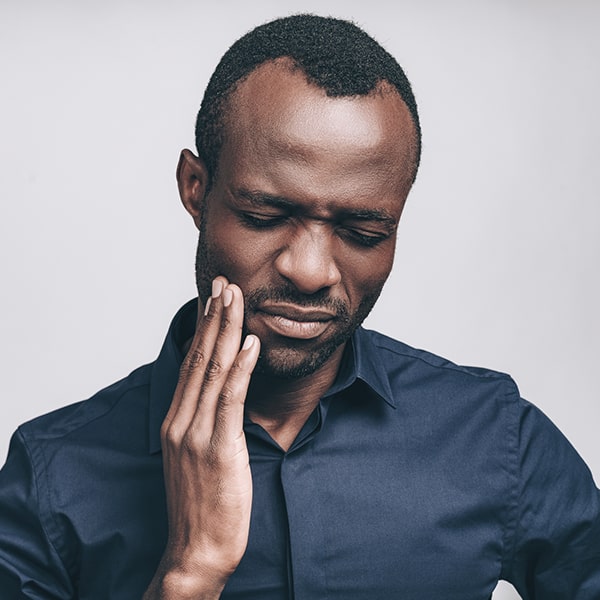
If your jaw clicks, aches, or locks, or if you keep waking up with headaches and tension you can’t explain, you’re not imagining it, and you’re not alone. Your temporomandibular joint (TMJ) is one of the most-used joints in your body, and when something goes wrong, it can affect how you eat, speak, sleep, and feel throughout the day. This page explains what TMJ disorder is, which symptoms to watch for, what puts you at higher risk, and how it’s diagnosed and treated, so you can understand what’s happening and what your options are.
At Advanced Cosmetic and General Dentistry in Mays Landing, NJ, Dr. John Nosti provides personalized TMJ evaluations and treatment plans for patients throughout Atlantic County, with an emphasis on listening first and recommending conservative, comfortable care. If you’re ready for answers, call Advanced Cosmetic and General Dentistry at (609) 625-3499 to schedule your TMJ consultation.

TMJ stands for temporomandibular joint, which is the joint that connects your jawbone (mandible) to your skull, specifically to the temporal bone. This joint lets you open and close your mouth, move your jaw side to side, and chew food. The TMJ is one of the most frequently used joints in the body.
The TMJ is a complex joint that operates with both hinge and sliding motions. It is surrounded by muscles, ligaments, and tendons that help control its movement. Issues with the TMJ can lead to a condition known as temporomandibular joint disorder (TMD), which can cause chronic pain, discomfort, and difficulty with jaw movement.


Typical Symptoms
Common symptoms of temporomandibular joint disorder are:
-
Headaches
-
Toothaches
-
Neck aches
-
Earaches
-
Upper shoulder pain
-
Ringing in the ears
-
Facial pain or tenderness around the jaw joint area
-
Difficulty opening the mouth very wide
-
Jaws that get “locked”
-
Clicking, grating, or popping sounds when opening and closing the mouth
-
Difficulty chewing

Causes of TMJ Problems
Visitors can take a free 25-minute voyage by water from Lower Manhattan to Staten Island, glimpsing the Statue of Liberty and stunning vistas of New York Harbor and the Manhattan skyline.
-
Misaligned bite: Your bite is how your teeth come together. Misalignments in bite, such as an overbite, cause undue stress on the muscles that move the jaw in chewing and on the nerves that control these muscles. As well as causing TMJ pain, this pain can also be “referred” to other parts of the head and neck. A bad bite can occur as a result of inherited jaw misalignments, through trauma, and as a result of broken-down or worn teeth
-
Teeth clenching and grinding (bruxism): Some people are habitual teeth grinders or clenchers, often done unknowingly during sleep. This constant pressure on the TMJ causes the muscles to tense up, leading to various symptoms of pain
-
Dislocation of the joint from the socket
-
Trauma and injury
-
Stress: People experiencing a great amount of stress can get into the habit of tightening their facial and jaw muscles or clenching their teeth
Diagnosing TMD
If you’re experiencing symptoms of TMD or TMJ pain, it’s crucial to seek medical attention from a dentist or doctor. They’ll perform a thorough evaluation of your symptoms and medical history and may also perform a physical exam of your joint and surrounding facial muscles. In some cases, imaging tests such as X-rays or an MRI may be used to help diagnose the condition.
Treatment options(title on page stays the same)
Once an accurate diagnosis has been made, Dr. Nosti creates your TMJ treatment plan at our Mays Landing, NJ practice. Remedies for TMJ disorders vary according to severity. If detected early, we may simply recommend that you rest the jaw muscles by avoiding hard foods, chewing gum, and relaxing the muscles with heat.
Your treatment can include one or more of the following:
Appliance therapy: Dr. Nosti custom-createsan appliance similar to a mouth guard that keeps your jaw in position and relaxed. The appliance can also adjust your bite to an optimal position.
Orthodontics: Once the jaw has been relaxed and healed, patients can choose to have more permanent fixes for their misaligned jaw or bite with orthodontics.
Dental work (such as crowns, veneers, and dental implants): Other dental work, such as crowns, veneers, and dental implants, can also work to reposition your jaw and bite.
Advanced Technology for Successful TMJ Treatment
It all starts with an accurate diagnosis.
Here are some of the tools Dr. Nosti uses to make a TMD diagnosis:
-
Joint Vibration Analysis (JVA)
This diagnostic technology provides a quick and accurate evaluation of the health of the TMJ. The JVA measures and compares the vibrations of your jaw when you open and close it against the normal vibrations of a smooth-functioning jaw joint.
Specific changes, such as those caused by jaw joint degeneration, tears, or displacement, produce different vibration patterns or “signatures.” Using a computer program, Dr. Nosti can identify the patterns and diagnosis the exact cause of the TMJ problem. A JVA analysis only takes a couple of minutes.
-
EMG Biofeedback
EMG, or electromyographic feedback, uses electronic sensors to monitor muscle tension. From this test, Dr. Nosti can evaluate the function of the muscles in the head and neck.
-
T-Scan® Bite Analysis
Dr. Nosti uses the Tekscan® T-Scan® to map the pressure caused by patients biting down onto a sensor.
The T-Scan® records an accurate, detailed measurement of the biting pressure throughout the mouth. This is transmitted to a computer to help Dr. Nosti analyze your bite. In an optimum bite, the teeth come together evenly with even pressure throughout the mouth. A bad bite, such as an overbite or underbite, can cause a great deal of stress on the TMJ, impair function, and cause pain.
-
Computerized Jaw Tracking
With the JT-3D computerized jaw-tracking device, Dr. Nosti can see how well the jaw operates. The JT-3D records the jaw movements in three dimensions.
Our dentist uses the jaw tracker to detect TMJ dysfunction, such as the limitation in opening of the jaw and jaw movement deviations.
-
Immediate Pain Relief with MLS Cold Laser Healing
For immediate pain relief, Dr. Nosti uses an MLS (Multi-wave Lock System), a cold laser that can reduce pain and inflammation at the same time. Traditional laser therapy can only treat one or the other at a time. This dual-action laser quickly reduces pain and swelling and speeds healing and recovery.
This cutting-edge laser is a powerful adjunct to therapy. Patients come to us in pain and leave feeling good. The MLS is used throughout treatment to reduce pain and increase healing.
Success Stories
Hear from our patients.
- Christina
- Jonathan Abenaim, DMD DICOI
TMJ Disorder Treatment
Let’s relieve that tension.


Once an accurate diagnosis has been made, Dr. Nosti creates your TMJ treatment plan at our Mays Landing, NJ practice. Remedies for TMJ disorders vary according to severity. If detected early, we may simply recommend that you rest the jaw muscles by avoiding hard foods, chewing gums, and relaxing the muscles with heat.
Your treatment can include one or more of the following:
-
Appliance therapy: Dr. Nosti custom creates an appliance similar to a mouth guard that keeps your jaw in position and relaxed. The appliance can also adjust your bite to an optimal position.
-
Orthodontics: Once the jaw has been relaxed and healed, patients can choose to have more permanent fixes for their misaligned jaw or bite with orthodontics.
-
Dental work (such as crowns, veneers, and dental implants): Other dental work, such as crowns, veneers, and dental implants, can also work to reposition your jaw and bite.
Frequently Asked Questions
When should I see a doctor for jaw pain?
Many visitors aren’t sure their symptoms are serious enough. A clear answer covers red flags like a jaw that locks or won’t open fully, pain lasting more than a couple of weeks, trouble eating, or pain with facial swelling or fever. It also encourages the right people to book.
Can TMJ go away on its own, or does it get worse if untreated?
This is different from “Is TMJ permanent?” because it speaks to people deciding whether to wait. Mild cases can settle with self-care, but ongoing grinding or clenching can lead to tooth wear, worsening pain, and joint changes.
What can I do at home for TMJ pain before my appointment?
This is a high-engagement question that also helps with featured snippets. You can cover soft foods, heat or ice, avoiding gum and wide yawning, gentle jaw stretches, and stress reduction. Add a line that home care doesn’t replace an exam.
Jaw Pain Is Not Something You Have to Just “Get Used To”
If jaw pain, constant headaches, or that dreaded clicking and locking have started to take over your days, you don’t have to keep pushing through it. TMJ disorder can make simple joys like sharing a meal, laughing with family, or getting a restful night’s sleep feel out of reach, and we understand how exhausting that can be. At our Mays Landing, NJ practice, Dr. Nosti takes the time to listen, carefully evaluates your jaw, and creates a personalized TMJ treatment plan built around your symptoms and your comfort.
Patients from Mays Landing, Hamilton Township, Egg Harbor Township, and the surrounding Atlantic County communities trust our team for gentle, thorough care. You deserve answers, and relief may be closer than you think. Call our Mays Landing dental office today at (609) 625-3499 to schedule your TMJ consultation and take the first step toward a comfortable, pain-free jaw.